Why the Cheapest Crusher Is Usually the Most Expensive: A McCloskey Quality Inspector's Take
I'm the person who signs off on heavy equipment before it ships. Roughly 200 tracked machines a year go through my team, and I've been doing this for eight years. In 2024, I rejected 11% of first inspections because something didn't match specification. That might sound harsh. But a small tolerance issue at the factory becomes a big cost problem at the job site.
Here's my view, and I'm not going to soften it: if a piece of equipment only wins on the purchase price, it hasn't won anything. The cheapest quote is often the most expensive decision you'll make, not because the supplier is dishonest, but because the quote never includes what happens after the machine arrives.
Wait, though. If you searched "McCloskey" and ended up somewhere unexpected, let's clear the air. Search results for McCloskey are a mess. There's Jay P. McCloskey, a "McCloskey prosecutor" query, a case reference with "Miranda" in it, an "Eddie near me" search, and a page about "what is Simparica for dogs." None of that is what I do. I work with the McCloskey that builds jaw crushers, screens, and stackers for quarries and mines. That's the McCloskey I can talk about for hours—and the one where value matters more than price.
Why I stopped believing the spec sheet
Let me take you through the first time this clicked. In Q1 2024, we received a batch of components where the fit-up gap was 1.2mm against our 0.8mm internal standard. The supplier said it was "within industry standard." The numbers said acceptable. My gut said it would come back to bite us. We rejected it, made them redo it, and still lost three weeks. That cost us a $22,000 redo. Paper can be right and still be risky.
No one puts that on a purchase order. The component was the cheapest option in the quote. What I mean is: it had the lowest purchase price and the highest total cost. I see the same pattern in heavy equipment. A crusher frame that's slightly out of true, a shaft with uneven hardening, a stacker belt that isn't tensioned right—all of it is "within tolerance" on a spec sheet, and all of it costs you in the field.
The real cost: availability
The biggest hidden cost is downtime. When a screening plant stops, you're not just losing one machine. The loader sits idle, the haul trucks back up, the whole process grinds to a stop. In our Q4 2024 maintenance records, a down hour at a typical quarry cost roughly $540 once you count crew time, support equipment, and lost production. If you're crushing premium hard rock, it's higher.
Do the math on two machines. One unit costs $35,000 less. The other has a better availability record—say 99% versus 96% over a 2,000-hour season. That 3% gap is 60 hours. At $540 per hour, it's $32,400. The cheaper machine has almost erased its price advantage in one season. Add repairs and operator frustration, and the "savings" are gone.
At least, that's been my experience with tracked crushing and screening equipment. Availability is not a feature. It's a cost, and it shows up in the bank account, not the brochure.
Resale value: the cost nobody plans for
The third hidden cost is the exit price. Very few people buy a crusher and keep it forever. At some point you'll upgrade, and the used market will decide how much of your initial investment comes back. A McCloskey machine has a large installed base, which means parts are available, mechanics know how to service them, and the brand has a track record in the resale market. That kind of confidence is hard to build and easy to lose.
Cheaper machines can be a hard sell used. Buyers are wary of parts availability and undocumented service history. If you save $30,000 on the front end but lose $40,000 on the back end, you haven't saved anything (note to self: more buyers should run this part of the calculation).
But what if my budget is fixed?
I can hear the procurement people already. "Easy for you to say. I don't have a choice." I get it. A limited budget is real. But a limited budget doesn't change how the math works. It just forces you to make the trade-off explicit.
If you truly can't afford the equipment that will do the job without constant babysitting, then the honest answer is not to buy the cheapest new machine. It's to buy used from a dealer who'll document the hours and service history, or to run your existing equipment longer while saving for the right one. That's not a popular thing for an equipment quality person to say. But I'd rather you lose a month of productivity than a year.
What I'd tell a buyer looking at McCloskey
Here's what I'd tell any buyer who lands here after searching "McCloskey jaw crusher" or "McCloskey stacker for sale": do a total cost of ownership analysis, not a price analysis. List purchase price, fuel and wear parts, scheduled maintenance, expected downtime, resale value. Put a dollar value on each one. As of January 2025, that's how we evaluate equipment in our own fleet.
McCloskey isn't always the winner. And I'm not saying the highest quote is always the best. But the machines I've inspected—like the J50v2 jaw crusher, the R230 stacker, or the ES250 screener—are consistent. The surprise wasn't that they look good. It's how much small things—threaded bolt holes that line up, service points you can actually reach—matter over five years. There's something satisfying about inspecting a machine where the details are done with intent.
And one more thing. If you came to this page because you were searching for Jay P. McCloskey, the McCloskey prosecutor, Miranda, Eddie near me, or what Simparica is for dogs—hey, I get it. Search results are weird. But if you're here for the McCloskey that builds crushers and screens, then take this with you: value is bigger than price, and the total cost number is the only honest one.
Buy the machine you can measure for the longest period. The one that looks cheapest is usually just the one that hides its costs longer.
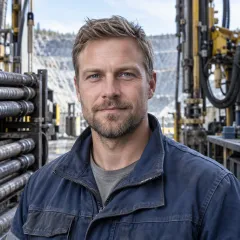
Soren Valgaard
Soren Valgaard covers surface and underground drill rigs, rotary drills, core drills, rock drills, DTH hammers, drill bits, and rock-reinforcement equipment. His evaluations reference ISO 18758-1 while comparing hole diameter, drilling depth, penetration rate, feed force, compressor demand, rod handling, fuel use, and rig stability. He helps mine engineers and equipment buyers match drilling systems to geology, bench design, production targets, operator safety, mobility, and maintenance conditions.