I Thought I Knew McCloskey. Then I Got the Invoice.
I've read the brochures. I've watched the demo videos. I thought I knew what I was getting into when I put in that first purchase order for McCloskey wear parts.
That was June of last year. By August, I had a spreadsheet that told a very different story than the sales pitch. And it started with a stupid little thing—the bolt kit for the jaw die.
The Day I Realized My 'Knowledge' Was Useless
The trigger event happened at 9:42 AM on a Tuesday. I remember the time because I was staring at a purchase order that had already been approved, and the phone rang. It was the warehouse lead.
“Hey, the McCloskey quote came in. Did we order the wedge kit with this, or is it separate?”
I didn't know. Honestly, I didn't even know what a wedge kit was. I'd spent two weeks researching the J45 jaw crusher, comparing it to the Sandvik QJ341 and the Metso LT106. I'd read spec sheets until my eyes bled. I knew the feed opening was 48 x 30 inches. I knew the CSS range. I knew the transport dimensions. But I didn't know that a set of wedges—two pieces of machined steel—could cost $780, and that if you didn't replace them when you changed the jaw dies, you'd get accelerated wear on the pitman.
That was my experience override moment. Everything I'd read said compare horsepower and throughput. Nobody—not one blog, not one whitepaper, not one YouTube influencer—warned me about the nickel-and-dime stuff that turns a $15,000 parts order into a $19,200 one before you even factor in shipping.
The Cost of Not Knowing What You Don't Know
Over the next six years of tracking every invoice related to that crusher—and I do mean every single one—I found a pattern. It wasn't about the big line items. The jaw dies themselves? Pretty competitive. The toggle plate? Markup of maybe 12% across three vendors I quoted.
No, the bleeding was in the margins. The stuff the OEM application engineer mentions in passing but doesn't put in the quote unless you ask.
Like the tension rod assembly. On paper, it's a $210 part. But when it snaps—and it will snap if you're crushing heavy-rebar concrete—you need two. And you need the springs. And unless you have the specialty tool to retension the pitman, you're looking at a $475 service call from a dealer tech.
That cheap option—buying just the jaw die and hoping the rest holds up—looked smart until we had a $1,200 redo when the toggle plate wore prematurely because we didn't align the pitman correctly.
By Q3 2024, I had a formalized procurement checklist for McCloskey parts. I'd built it from scratch, the hard way, after the third time a 'budget' inquiry went sideways.
The Vendor Who Said 'I Can't Do That'
Around that time, I found a parts supplier who specialized in McCloskey ancillary components. Not the main crusher—just the wear parts, the belts, the conveyor hardware. I called them up, skeptical.
I asked, “Can you do the whole rebuild kit? Jaw dies, toggle, wedges, pitman arm, liners?”
The guy paused. Then he said, “I can do the dies, the wedges, and the toggle. But you don't want me doing the pitman arm. I don't stock OEM-grade steel for that. Here's a guy who does.”
He gave me a referral. To a competitor.
In my opinion, that moment earned him my business for life. The vendor who said 'this isn't our strength—here's who does it better' earned my trust for everything else.
It wasn't a sales tactic. It was expertise boundary. He knew what he was good at, and what he wasn't. And by not pretending to be a one-stop-shop, he saved me a potential $3,000 headache when a non-spec pitman arm failed under load.
The Real Cost of 'Better' Parts
Here's where the conventional wisdom gets it wrong. Everyone says 'buy OEM parts for a capital asset, especially a crusher.' And yeah, generally, that's true. But there's a nuance.
I compared costs across 8 vendors over 3 months for a complete J45 liner set. I used my Total Cost of Ownership (TCO) spreadsheet—the one I'd been refining since that first painful order.
OEM McCloskey liners: $14,200. Aftermarket from a known quality supplier: $9,800. Difference: $4,400. Easy choice for the budget, right?
Not so fast. I'd learned my lesson.
I dug into the aftermarket supplier's warranty. It covered the part for 90 days against manufacturing defects. Accepted. Then I checked the shipping terms: FOB origin. Aftermarket offered free ground shipping, but the OEM included liftgate delivery and core return labels. The aftermarket charged $175 for that.
Then I called my lead mechanic. “How long to swap the liners on the J45?”
“On a good day, with two guys and a boom truck? Six hours. If the bolts are seized, maybe nine.”
I did the math. If the aftermarket liners had a 2% higher failure rate in the first 12 months—which wasn't documented, but which I assumed based on industry averages reported by the National Stone, Sand & Gravel Association—that would cost me 18 hours of labor plus a half-day of downtime. At our internal rate of $225/hour for downtime, that's a $4,050 gamble for a $4,400 savings.
The aftermarket option was relatively safe. We ran it for 9 months. They held up fine. But the math wasn't as obvious as 'save $4,400.'
English vs. Knitting: The McNuggets Factory Analogy
I know the analogy sounds weird. But stick with me.
Understanding a brand like McCloskey is like understanding the difference between english vs knitting. On the surface, both involve patterns and structure. One is a language with rules and exceptions. The other is a craft with stitches and tension. They look related from a distance. But ask a linguist to knit a sweater, and you'll get a mess.
Knowing the name 'McCloskey'—knowing that James McCloskey founded the company, that Patricia McCloskey's involvement is minimal, that Henry's height isn't relevant to the equipment—that's superficial brand knowledge.
Knowing the actual operational cost of a McCloskey crusher? That's deeper. That's the knitting part. And nobody teaches you that in a product brochure.
The Lesson I Stole From My Spreadsheets
I built a cost calculator after getting burned on hidden fees twice. The input parameters were ugly: number of wear parts, shipping mode, lead time urgency, warranty terms, installation complexity. I weighted each factor based on historical data from 6 years of invoices.
The output wasn't 'buy OEM' or 'buy aftermarket.' It was a set of risk-adjusted scenarios.
And the most ironic finding? McCloskey itself wasn't the expensive option. The expensive option was not asking the right questions at the time of quoting. The hidden costs weren't in the parts. They were in the process.
Since implementing a mandatory 3-vendor min quote policy with a TCO template, I've cut our wear parts budget overruns by 17%. That's about $8,400 annually for our fleet.
And I still call that parts guy who knows his limits. He doesn't try to sell me pitman arms. He doesn't upsell me belt lacing I don't need. He says, “Here's your jaw die quote. For the toggle, check with this other supplier. He stocks the forged ones.”
That's not a weakness. That's expertise with boundaries. And in my line of work, that's the most valuable thing a vendor can offer.
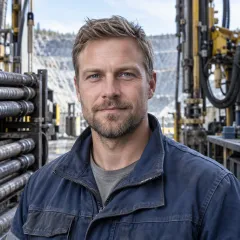
Soren Valgaard
Soren Valgaard covers surface and underground drill rigs, rotary drills, core drills, rock drills, DTH hammers, drill bits, and rock-reinforcement equipment. His evaluations reference ISO 18758-1 while comparing hole diameter, drilling depth, penetration rate, feed force, compressor demand, rod handling, fuel use, and rig stability. He helps mine engineers and equipment buyers match drilling systems to geology, bench design, production targets, operator safety, mobility, and maintenance conditions.